Design First, Laser Second
The most common sequencing mistake in cover-ups is starting laser sessions before deciding what is going on top.
It seems reasonable — lighten it as much as possible, then work out what to put there. But “as much as possible” is not a target, it is an open-ended commitment, and it means you either overspend on sessions you did not need or stop somewhere arbitrary and hope your artist can work with it.
The design sets the target. A dense black-and-grey piece might need three sessions. Fine line work over the same tattoo might need six. Same old ink, double the course, entirely because of a decision you had not made yet. That is why everything in our cover-up fading service starts with the question of what you are having instead.
What the Artist Needs to Specify
You do not need a finished, inked-in design before your first laser session. You do need answers to four questions.
The style and rough darkness. Blackwork, black-and-grey, colour, fine line — each has completely different covering power.
The palette. Colour over residual black reads muddy, so a colour-led design needs a lighter base than a black-and-grey one of the same size.
The footprint. Will the new design fully enclose the old shape, or will parts of the original sit outside it? Any overhang is fully exposed and needs proportionally more clearance.
How much old ink they want cleared. Ideally as a plain statement: “I need those heavy outlines down to a shadow” or “the block shading needs to be patchy grey at most”. Artists are usually happy to be that specific if asked directly.
With those four answers we can size the bundle accurately at consultation rather than reassessing after every session. The detail on how those factors translate into a target is in how much fading your design needs.
The one line to send your artist
“I am getting this lasered before you cover it — how light does it need to be for the design you have in mind?” That message answers most of what we need.
How the Sequencing Works
A well-run cover-up plan runs in five steps.
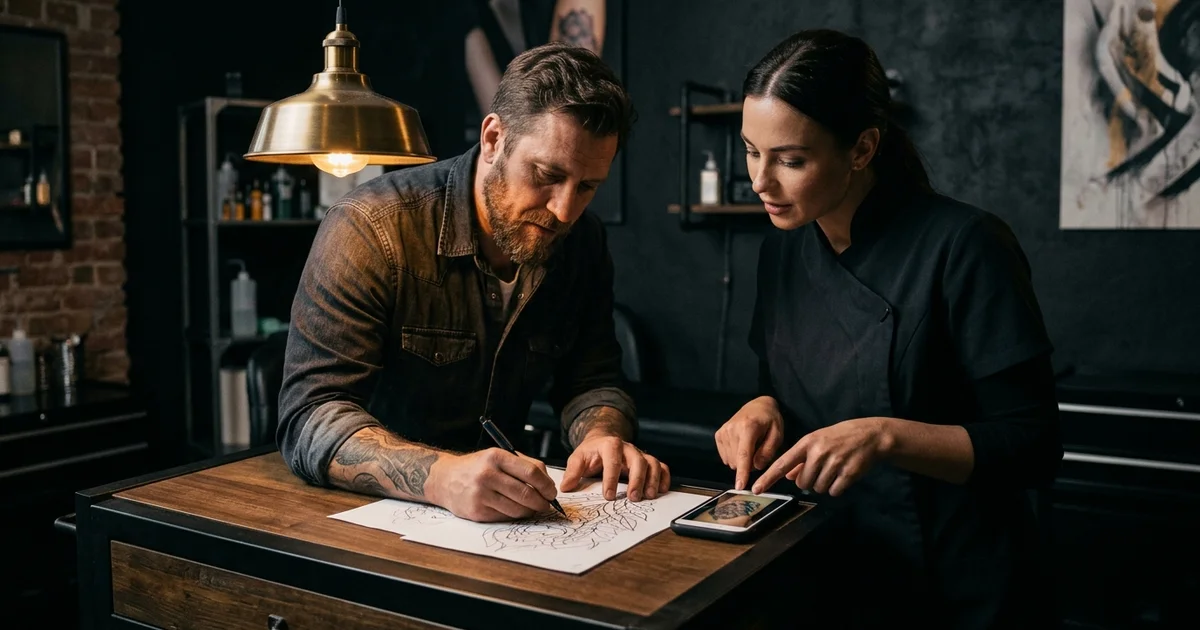
1. Design consultation with the artist. Style, palette, footprint and a rough sense of how much has to go. This can be a conversation, an email or a shop visit.
2. Laser consultation with us. We look at the old tattoo, run a patch test, and size the bundle against what the artist specified. You get a fixed bundle price and a realistic calendar.
3. Fading sessions. Six to eight weeks apart. We photograph progress each time so both you and your artist can see the trajectory rather than guessing at it.
4. Assessment. Somewhere around session three or four, the artist looks at where the skin is. Sometimes they say that is enough. Sometimes they want one more. This is the step that most often gets skipped, and it is the one that prevents both over-treating and under-treating.
5. Healing gap, then new work. Six to eight weeks after the final session. The skin needs to be fully recovered, and the ink keeps lifting during that window, so waiting means the artist is working against the actual endpoint.
Booking the tattoo appointment before the fade is finished is a common source of stress. If you have a specific artist with a long waiting list, tell us the date and we will build the session schedule backwards from it.
The Advantage of One Roof
Cloak & Dagger has been tattooing in Shoreditch since 2013, and the laser suite opened inside the same studio in 2022. That combination changes a few things practically.
We judge fading targets the way an artist does, because there are artists in the building to ask. When someone shows us a design, the assessment of whether the base is ready is not a technician’s guess — it is a conversation with someone who will actually be putting a needle through that skin.
Scheduling is simpler too. The final laser session and the tattoo appointment can be coordinated properly rather than negotiated across two businesses with different diaries.
And if you do not have an artist yet, we can point you at one whose style suits both what you want and what the old piece will allow.
None of that means you have to use our artists. Plenty of clients come to us for the laser work with someone else lined up for the tattoo, and we coordinate with them directly and happily. What matters is that the two halves of the plan are talking to each other.
What to Bring to the Consultation
The more of this you have, the more accurate the bundle sizing will be. None of it is mandatory — plenty of people arrive with nothing but the tattoo and we work from there.
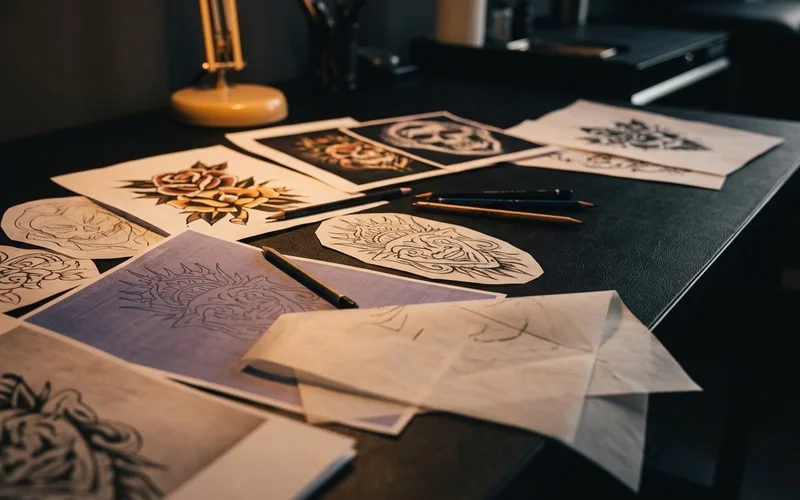
Reference images. Photographs of the style you want, even if the specific design does not exist yet. Darkness and density are what we need to read, and a reference communicates those far better than a description.
Your artist’s notes. Anything they have said about how much old ink needs to go, in their words. If they have sketched over a photo of the existing piece, bring that.
Photos of the old tattoo when it was fresh, if you have them. Original saturation tells us how much pigment went in, which is not always obvious from what is left.
A rough date. If you are working towards a wedding, a holiday or a booked slot with an artist who has a long waiting list, say so at the start. We schedule backwards from a date far more easily than we compress a course afterwards.
Your medication list and any history of keloid scarring. Both change the protocol, and both are easier to account for before the patch test than after.
Bring reference images, your artist’s notes, or your artist. Book a consultation with your references and we will size the job properly the first time.