The Fork in the Road
At some point, everyone thinking about getting rid of a tattoo hits the exact same decision point.
You must choose whether to clear the skin entirely or prep the area for a better design.
We see this constantly in our studio when clients realise their old ink no longer represents them.
Deciding on tattoo removal vs fading for cover up is a critical first step.
Both paths are legitimate options with completely different timelines, costs, and clinical outcomes.
Picking the wrong route is expensive in a way that is hard to undo.
If you find yourself wondering, should I remove or cover my tattoo, this guide lays the two options out side by side. This is the exact same conversation we would have with you at a free consultation.
So, if you want ink there but not that ink, choose our tattoo fading for cover-ups service.
If you want the ink gone entirely, choose complete laser tattoo removal.
The Two Paths Compared
The decision between a cover up or laser removal comes down to your final goal and your total budget. Fading requires fewer sessions, but you must factor in the price of the new artwork. Complete clearance takes longer but leaves you with a completely blank canvas.
| Fading for a cover-up | Complete removal | |
|---|---|---|
| Typical sessions | 3 to 6 | 5 to 10+ |
| Calendar time | 5 to 10 months | 12 to 18 months |
| Pricing model | 3- or 6-session bundle | One fixed price, unlimited sessions |
| Additional cost | The cover-up tattoo itself | None |
| Final outcome | New artwork, old piece hidden | Clear skin |
| Reversible later | Yes, can switch to full removal | No, but you can be tattooed again |
| Design constraints | New design must be dark enough | None |
| Best when | You want a tattoo there | You want the skin back |
According to current UK industry averages, a highly-rated custom artist charges between £400 and £800 for a full day session. Fading is cheaper as a laser course, but the new art is a completely separate spend. A top-tier piece from a specialist can easily push your total investment past the cost of full clearance.
We always remind clients to compare the whole cost of each path rather than just the laser part. That advice is not an argument against fading, but rather a push for full financial transparency before you start.
Who Should Choose Complete Removal
Choosing complete clearance makes the most sense if you want your bare skin back. This option removes all traces of the ink using advanced, medical-grade laser technology.
- You dislike the placement, not just the design: If the problem is having ink on your forearm at all, a better piece will not solve it.
- You want your options open: Clear skin can be tattooed again later with absolutely anything. Covering a cover-up is significantly harder than dealing with an original piece.
- Your work or plans require it: Some corporate careers and specific professions genuinely make visible ink a problem in the UK, and no amount of design quality changes that reality.
- The old piece is small: Tiny tattoos often clear in three or four sessions on a fixed-price package. That is barely more than a fading course for a completely finished outcome.
- You are simply done with tattoos: This is a perfectly common reason, and nobody in our studio will ever question it.
There is one more argument for full clearance that people rarely weigh properly. The new art you get today is a decision made under constraint. A cover-up design has to be dark enough, dense enough, and large enough to hide what sits underneath.
This physical reality rules out entire styles like fine line or watercolour. Clear the canvas, and your next piece can be absolutely anything. Fine line, colour, negative space, and small designs are all possible, with no compromise built into the process. If you want a specific style that could never hide the old ink, removal is not just the slower route. It is the only route.
The question that usually settles it
If we cleared this completely, would you get something new in the same spot? A quick yes points to fading. A hesitation points to removal.
Who Should Choose Fading
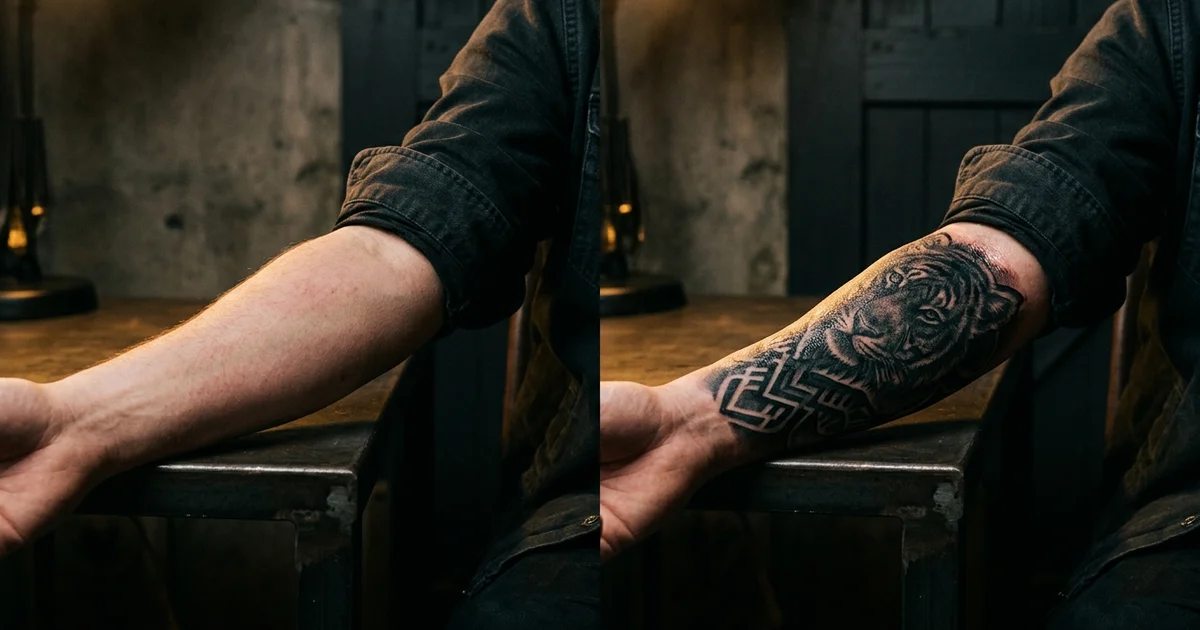
Fading your ink is the best choice if you love the placement but hate the current design. This method lightens the old piece just enough to give your artist a workable canvas.
We typically see clients achieve this necessary fading in just three to six laser sessions. Exactly where you land in that range depends on how faded the old ink needs to be for the design you have in mind, which is the judgement we make together at consultation.
- You already have a design in mind: Lightening the old ink is the faster, cheaper route if you know exactly what you want instead.
- The tattoo is very large: Completely clearing a full sleeve is a long, expensive commitment. A well-planned cover-up over a partial fade is often a much more realistic path.
- You still like tattoos: This remains the most common reason for this choice. There is nothing wrong with the medium, just this particular execution of it.
- You have an artist you trust: A great UK-based artist working over a properly prepared base produces something genuinely better than the original. That is a fantastic outcome, not a compromise.
- Time really matters: Five to ten months versus twelve to eighteen is a massive difference if you have a specific deadline like a wedding.
- The placement is fine: If you would happily have fresh ink in that spot, a cover-up gives you what you want in roughly half the time. You also skip having a long period of bare skin in between.
Nothing Is Locked In
The most useful thing to know is that your decision is not final at the moment you make it. Both paths start exactly the same way, using the exact same laser technology.
We use identical medical-grade lasers and identical processes for every client. The only difference between fading vs full tattoo removal cost and timeline is where you decide to stop.
Clients change their minds midway through treatment all the time for two main reasons:
- Switching to removal: People start a fading bundle, complete three sessions, and realise they actually prefer clear skin. Our specialists simply roll those initial appointments into a complete clearance package rather than starting the clock again.
- Switching to fading: Someone books full clearance, gets four sessions in, and realises they just hated the specific design. At that point, they have a beautifully prepared base for new art, alongside a much wider choice of what can go on it.
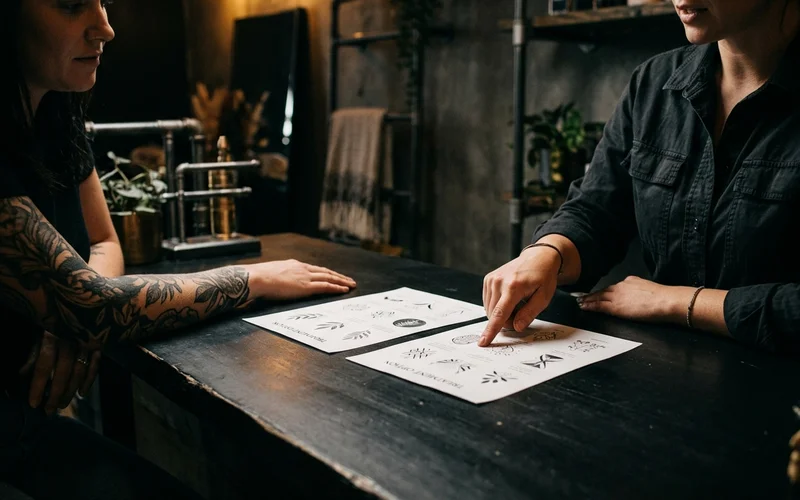
Therefore, the most honest advice is to avoid agonising over this before your consultation. Bring the ink, tell us what you are drawn towards, and specialists will show you what is realistic on both paths.
If your budget is the main deciding factor, reading how the two pricing models compare is a brilliant next step. The fixed-price structure changes the maths on complete clearance much more than most people expect.