The Direct Answer
Yes, with correct eye protection and correct technique.
Laser energy is genuinely dangerous to the eye. The retina is exceptionally vulnerable, and damage from laser exposure is immediate and permanent. That is not scaremongering — it is precisely why the protocol around facial pigment work exists and why it is not negotiable.
What makes brow and eyeliner removal safe is not the laser being gentle. It is that the eye is physically shielded from it throughout, so the question of what the energy would do to the eye never arises. Everything else at our eyebrow and cosmetic removal service follows from getting that one thing right.
What the Shields Actually Are
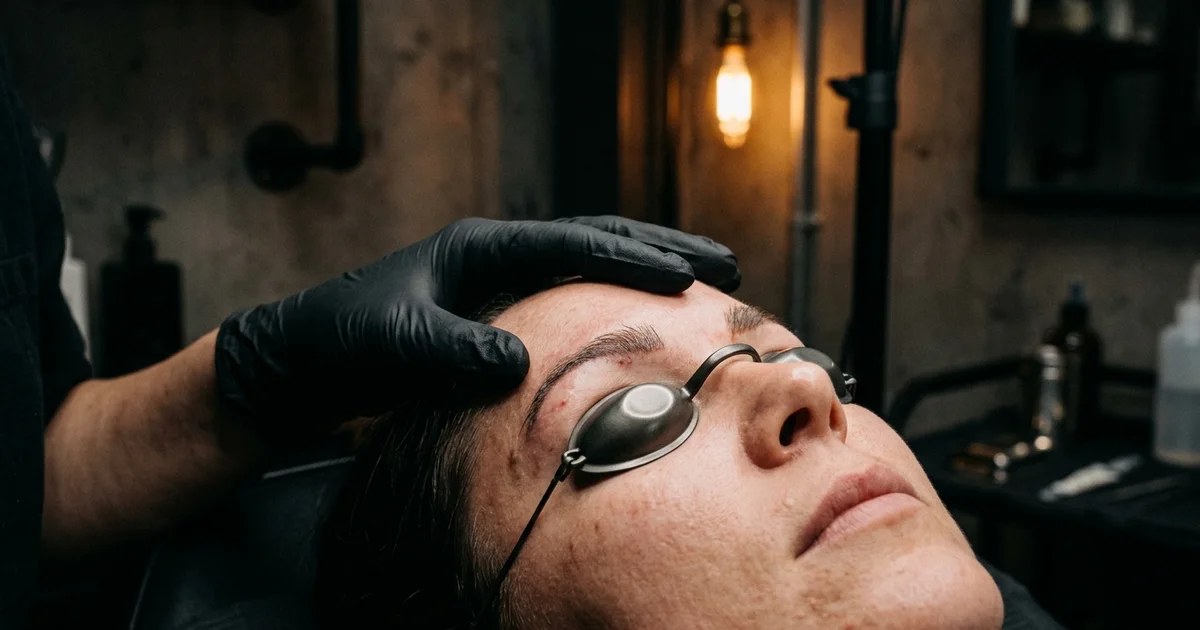
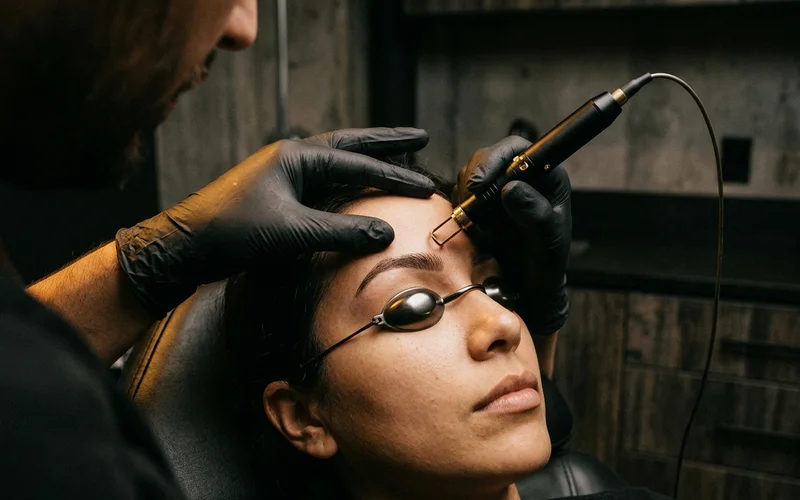
They are rigid, opaque shields designed for laser work around the eye. They are placed directly over the eye, under the eyelid area, and they stay there for the whole session.
They are not tinted goggles worn over the face. Goggles protect against scattered light from a distance; they do nothing when the handpiece is working a centimetre from the lid. Adhesive eye pads are similarly inadequate for close facial work.
Seating them takes about a minute. It feels strange for the first ten seconds and then you stop noticing. You will not be able to see for the duration, which some people find disorientating, so we narrate each step as we go — where we are working, how many passes are left, when we are about to start again.
The question to ask any clinic
“What eye protection do you use for brow work?” If the answer is goggles, glasses or pads, they are not equipped for it. Rigid intraocular shields are the standard, and a clinic doing this properly will tell you about them before you ask.
Precision Spot Sizes and Controlled Energy
The second half of safe facial work is treating facial skin as facial skin rather than as a small piece of body.
Spot size. Body tattoo work uses larger spot sizes to cover area efficiently. A brow is a few centimetres of detailed pigment sitting next to skin you do not want treated. Smaller spot sizes let us work precisely along a hair-stroke line without scattering energy across the surrounding area.
Energy settings. Facial skin is thinner, better supplied with blood, and reacts more strongly than skin on an arm or a back. Settings that are unremarkable on a shoulder are too aggressive on a brow, so we run lower and accept a slightly longer course in exchange.
Pass discipline. Fewer passes per area per session, with more time between them. There is no benefit to pushing a facial area hard in one visit; the pigment clears on its own schedule regardless.
Brow, Eyeliner and Lip Blush Are Different Jobs
| Area | Sensitivity | Key consideration |
|---|---|---|
| Brows | Moderate | Most common, most predictable, good response |
| Permanent eyeliner | Highest | Closest to the eye; smallest spot, lowest energy |
| Lip blush | High | Vascular tissue, more swelling; pigment response varies widely |
Eyeliner is the one people worry about most, and reasonably so. It is treated with the smallest spot size we have and the lowest energy that will do anything useful, and it is the area where we are most likely to say the course will be longer than you would like. That is the trade-off for doing it safely.
Lip blush swells substantially — lips are vascular and react accordingly. Pigment response is also the least predictable of the three, since lip pigments vary enormously between brands.
Brows sit in the middle: routine, well understood, and the area where the response is most consistent. Our guide to what a session involves walks through a brow appointment start to finish.
Realistic Swelling and Downtime
Facial skin swells more than body skin. Expect noticeable swelling for one to three days, peaking on the first day. The treated area also darkens immediately after each session before it begins to clear.
That first week is not a good week for photographs, and brow makeup is out while the area heals. Plan sessions around anything important rather than hoping it settles faster than it does.
Keep the area out of direct sun throughout the course, and use SPF once it has healed. Facial skin, healing, and UV is the combination that leaves pigmentation changes hanging around.
Why the Facial Patch Test Matters More Here
On body work, the patch test is mostly about the ink. On facial work it is about the skin as much as the pigment.
We test on the actual treatment area rather than somewhere convenient like the inner arm, because facial skin behaves differently from everywhere else on the body. It is thinner, better supplied with blood, and it swells and reddens more readily. A response that would be unremarkable on a shoulder can be more than you want on a brow.
The test also tells us how your specific cosmetic pigment behaves, which matters more than it does with body ink. PMU pigments are iron oxide and titanium dioxide mixtures, and a few of them darken on the first pass before they begin clearing. Finding that out on a few millimetres of brow is a very different experience from finding it out across both.
Then we wait. The test needs time to settle so we can see the swelling resolve, check for any pigment shift, and confirm the energy was appropriate. That is why your first full session is always a separate appointment, and why anyone offering to treat your brows on the day you first walk in is skipping the step that keeps this safe.
If the safety question is what has been stopping you booking, the patch test is a low-commitment way to see the whole protocol in action — shields, settings and all. Book a free patch test and judge it for yourself.