

What the Appointment Is For
The consultation exists to answer three questions: is laser removal suitable for you, roughly how long will it take, and what will it cost.
You will not be sold anything. Nothing is booked, nothing is paid for, and you leave with information rather than a commitment. If you decide we are not for you, that is a completely normal outcome of a consultation and nobody here will make it awkward.
It takes around thirty minutes, and it is the first step of our fixed-price laser tattoo removal. If you would rather just get it in the diary, you can book your free consultation and read the rest of this later.
What We Assess
The tattoo itself. Where it sits on your body, how deep the ink was placed, how densely packed it is, which colours are in it and how old it is. Every one of those changes the plan, and none of them can be judged reliably from a photo.
Your skin. Your Fitzpatrick skin type decides which wavelength we lead with and how conservative the energy settings need to be. We also look at the skin around and under the tattoo — existing scarring from the original tattooing is common and worth identifying before rather than after.
Your medical background. Medications that increase photosensitivity, a history of keloid scarring, pregnancy or breastfeeding, recent sun exposure or a tan, and any autoimmune condition all affect whether and how we treat. None of these are automatic barriers, but they change the protocol.
What you actually want. Complete clearance and fading for a cover-up are different jobs with different end points and different pricing. If you have a new design in mind, bring it — the darkness and density of what is going over the top decides how much old ink has to go.
The Patch Test
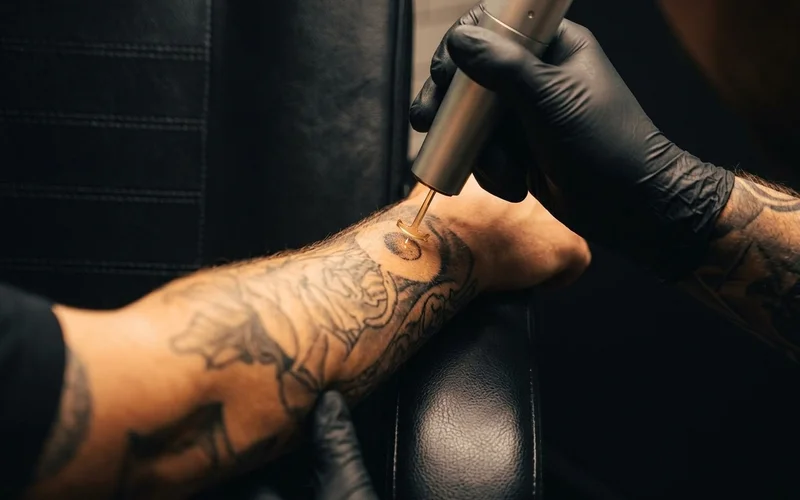
We treat a small area of the tattoo, usually somewhere inconspicuous, with the settings we would plan to use.
It takes seconds. You will feel the sensation properly for the first time, which for a lot of people is the most useful thing about the whole appointment — what the sensation feels like is far easier to judge from four seconds of it than from any description.
The test tells us three things. Whether your specific ink fragments at the energy we planned, which varies more between tattoos than people expect. How your skin reacts, which matters most on deeper skin tones. And whether there is any unexpected response, which is rare but is exactly the sort of thing you want to find on a two-centimetre patch rather than across a full sleeve.
It then needs time to settle. That is why treatment does not start on the same day, and why any clinic offering to laser your whole tattoo on the first visit is skipping a step.
What to bring
A list of any medications you take. Reference images if you have a cover-up design in mind. Your tattoo artist’s notes if you are planning to work with them. And wear something that gives easy access to the tattoo.
What You Leave With
A realistic session estimate. A range, with honest caveats about which parts might be stubborn. If your piece has green in it or sits on your ankle, you will hear about that at the consultation rather than at session seven.
Your fixed price. One figure covering unlimited sessions until all removable ink is cleared, for complete removal. Or a 3- or 6-session bundle if you are fading for a cover-up. It does not change afterwards. The reasoning behind our fixed-price removal packages is that the risk of a longer course should sit with us rather than with you.
Finance options if you want them. An 11-month 0% APR plan is available, and we will walk you through the monthly figure once you have your quote.
Aftercare information. Even for the patch test, so you know what to do with the treated spot.
The Questions We Will Ask You
None of these are gatekeeping. They all change the protocol, and answering them properly gets you a safer, faster course.
Medications. Some raise photosensitivity — certain antibiotics, retinoids, and a handful of common prescriptions. It rarely rules treatment out; it usually means adjusting settings or timing.
Skin history. Any keloid or hypertrophic scarring, eczema or psoriasis in the area, and how your skin generally reacts to injury.
Recent sun or tanning. A tan on the treatment area changes how the skin absorbs energy. Two weeks clear of sun and fake tan is the standard ask, and if you have just come back from holiday we will postpone rather than treat over it.
Pregnancy or breastfeeding. We do not treat during either. It is a precautionary standard rather than evidence of harm, but it is the standard.
Previous removal attempts. If another clinic has already treated this tattoo, tell us how many sessions and roughly what settings if you know. Partially treated ink behaves differently from untouched ink.
What you want. Complete clearance, or light enough for a cover-up. Different job, different plan, different price.
Before You Come In
Avoid sun exposure and fake tan on the area for a couple of weeks beforehand — a tan changes how your skin responds and can mean we have to postpone. Do not put moisturiser, makeup or self-tanner on the tattoo that day. Eat beforehand rather than arriving on an empty stomach.
If you are not sure whether removal is even the right route, come anyway. A good proportion of the conversations we have end with “actually, given the design you want over it, you may not need much laser at all”. That is a fine outcome, and it still costs you nothing.