What a Session Actually Involves
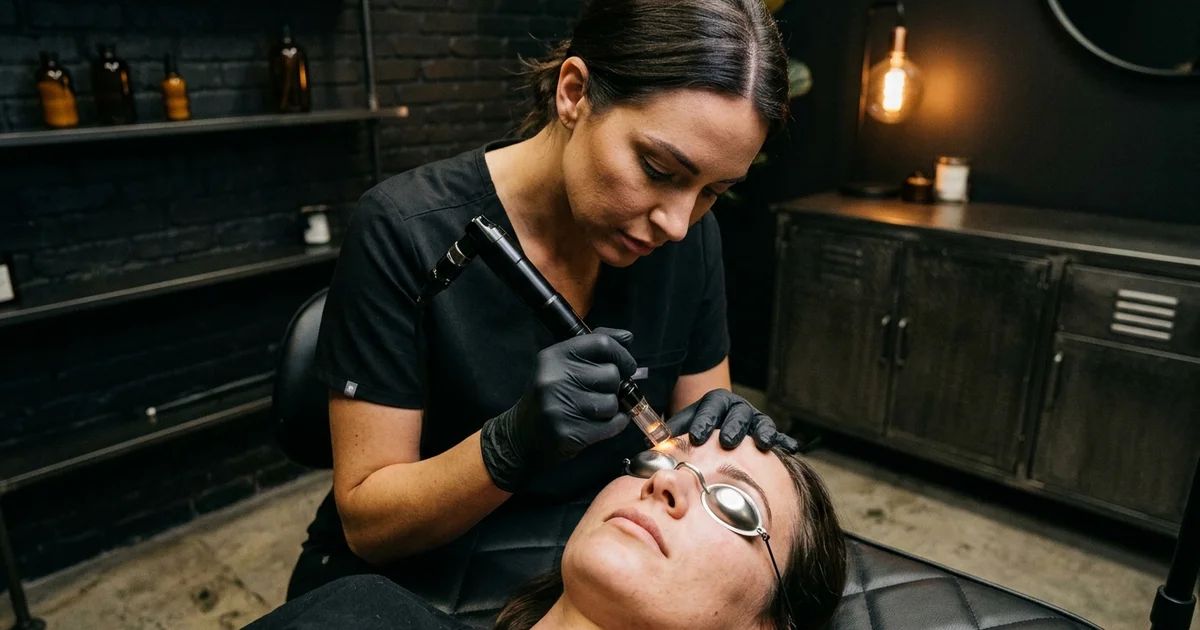
A microblading removal session is short. The treatment area is small, so the laser part usually takes a couple of minutes at most — the appointment is longer than the treatment by some margin.
You lie back, we position and seat the protective eye shields, and we confirm you are comfortable before anything starts. Cryo-cooling runs throughout. We work across the brow in short passes with breaks, and you will feel a sharp snapping sensation, similar to an elastic band flick, that stops the moment the pass does.
Immediately afterwards the brow area will look darker and will swell. That swelling is more pronounced than you would see on body work — facial skin simply reacts more — and it typically peaks within the first day.
Everything about the protocol at our eyebrow and cosmetic tattoo removal service is scaled for facial skin rather than adapted down from body settings, which is the main thing that separates a specialist from a general clinic here.
Eye Protection and Positioning
Rigid protective shields go over the eye and stay in position for the entire session. They are not goggles or adhesive pads worn over the face — they physically sit between the treatment area and the eye, blocking any energy from reaching it.
Seating them takes a minute and feels odd for about ten seconds. Once they are in you cannot see, which some people find disorientating the first time, so we talk you through each step as we go.
Nothing starts until the shields are properly positioned and you have confirmed you are ready. If you want to stop mid-session, we stop. The full detail on how we protect your eyes is worth reading if this is the part making you hesitate.
Why the shields matter more than the laser spec
Any competent laser can treat brow pigment. What separates safe facial work from unsafe facial work is the shielding protocol and the operator’s willingness to be slow about it.
Why Brow Pigment Often Clears Faster
Microblading pigment is deposited far more shallowly than a body tattoo. The technique places it in the upper dermis rather than deep into it, which means the laser reaches it easily and your immune system has less work to do carrying it away.
Volume helps too. A microbladed brow contains a tiny fraction of the pigment in even a small body tattoo, so there is simply less to clear.
The result is that three to six sessions is a typical course, and partial lightening for a re-do can sometimes be done in two or three. That is meaningfully quicker than most body work of any size.
The caveat is pigment chemistry. PMU pigments use iron oxide and titanium dioxide rather than the carbon-based inks used in body tattooing, and those behave differently — some shift colour before they clear, and a few are genuinely stubborn. The facial patch test tells us which you have.
Timeline and Healing
| Stage | What happens |
|---|---|
| Immediately after | Brow area darkens; frosting fades within ~20 minutes |
| Day 1–3 | Noticeable facial swelling, peaking on day one |
| Day 3–7 | Swelling settles; light scabbing may form over the brow |
| Week 1–2 | Scabbing comes away on its own; do not pick it |
| Week 2–8 | Pigment clears steadily; brow lightens visibly |
| Week 6–8 | Next session, if the course continues |
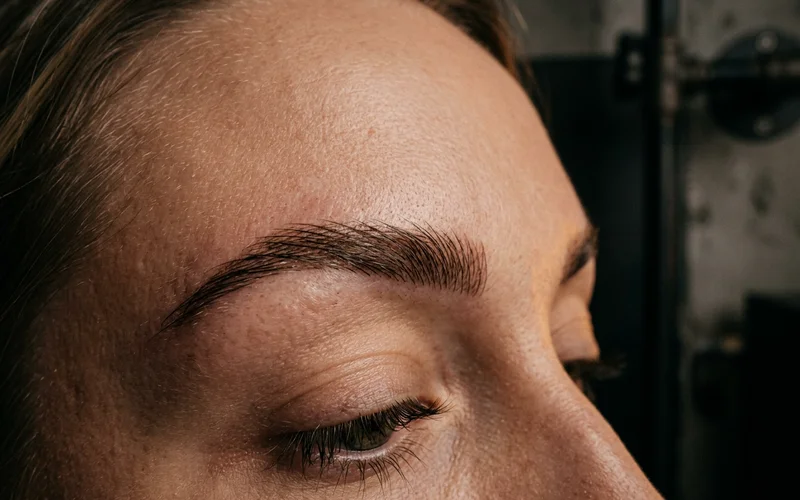
Two practical points. First, plan around the first week — the swelling is visible and brow makeup is off the table while it heals. Second, mid-course brows often look patchy or unevenly shaded before they clear, because pigment does not fragment uniformly. It evens out.
That second point is worth dwelling on, because it is the stage people find hardest. Immediately after a session the brow darkens, which feels like the opposite of progress. Over the following fortnight it settles, and somewhere around week three you start seeing genuine lightening. By the time you come back for the next session it will be noticeably paler than it was — but the trajectory across a course is a series of steps, not a smooth slope, and judging it a week after a session will always look discouraging.
Brow hairs are not affected by the treatment, so you keep whatever natural brow you have throughout. Most people manage the visible phase with brow pencil or powder once the skin has closed over.
Keep the area out of the sun throughout the course. Facial skin plus healing plus UV is the combination most likely to leave pigmentation changes hanging around longer than they need to.
Re-Tattooing Afterwards
Most people having microblading removed are not aiming for bare brows. They want a fresh start with a technician they trust.
That is entirely doable, and it usually needs less removal than full clearance. Partial lightening — clearing enough that a technician is working on a clean, neutral base rather than over old shifted pigment — is the common route and often only takes two to four sessions.
Wait until the skin has fully recovered before new pigment goes in, usually several weeks after your final session. Your PMU technician will have their own view on timing and we are happy to talk to them directly.
If you are still weighing up whether to clear the pigment or have someone work over it, removing versus correcting sets the two options side by side.