
The Short Explanation
Permanent makeup does not fade evenly. It fades selectively, and what is left behind after the fading defines the colour you end up looking at.
PMU pigments are mixtures. A warm brown brow pigment might combine red iron oxide, yellow iron oxide, black and a white base. Those components do not break down at the same rate under UV exposure and the body’s slow clearance. The ones that go first leave the survivors to set the tone.
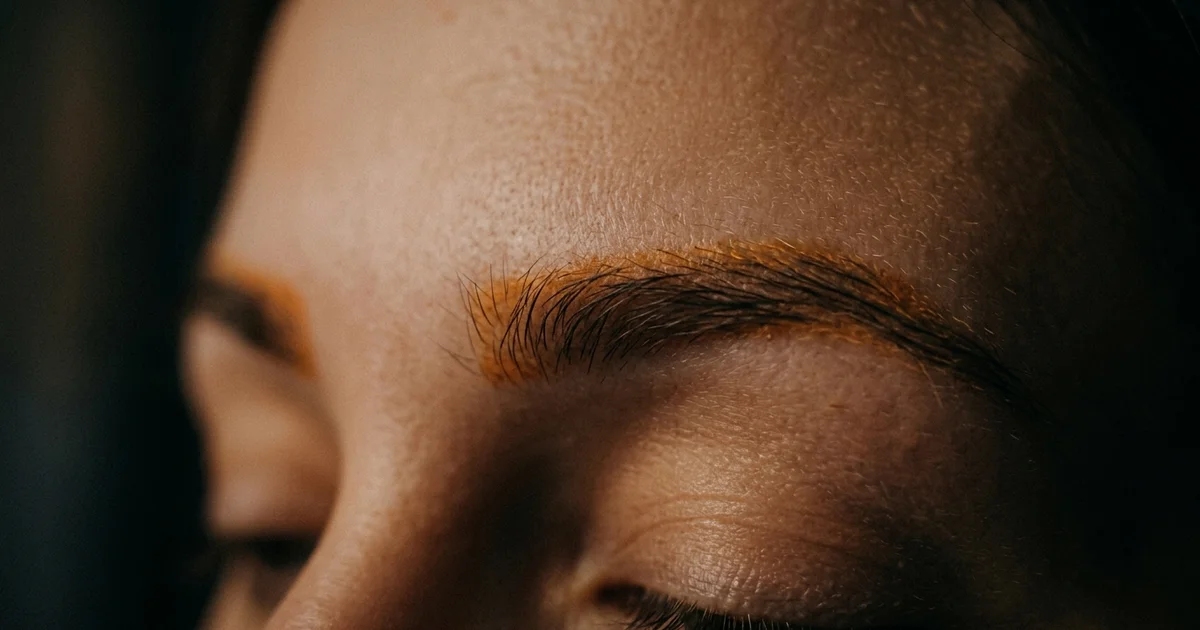
Lose the cool components from a warm mix and you are left with orange or red. Lose the warm components from a cool mix and you are left with grey or blue. Neither outcome means the original technician did anything wrong — it is what happens to these pigments over three to five years in skin. It is also, unsurprisingly, the most common reason people arrive at our PMU removal service.
The Two Culprits
Iron oxide. The pigment family behind most brow work. Iron oxides are chemically reactive — the clue is in the name, since oxidation is exactly what rust is. Over time, exposure to oxygen and UV shifts their oxidation state, and red and yellow iron oxides drift warmer as they degrade. When the black component in a mixed brown pigment breaks down faster than the reds and yellows, you get the classic orange brow.
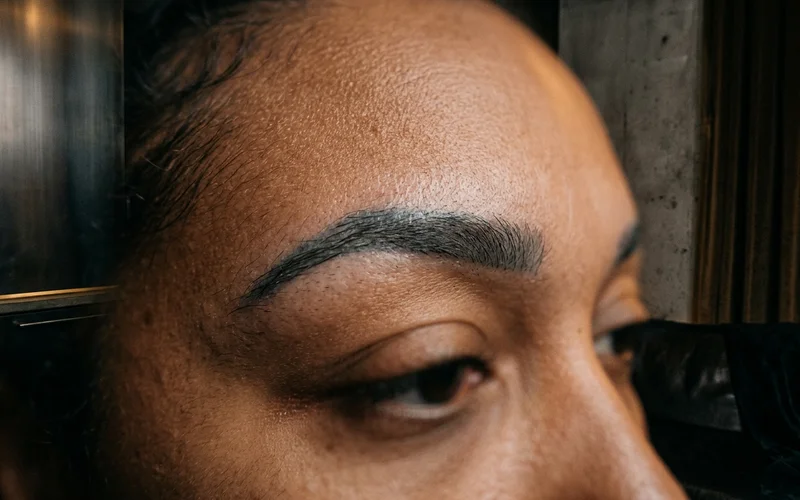
Titanium dioxide. Used as a white base to lighten and soften a pigment mix. It is exceptionally stable, so it outlasts almost everything mixed with it. As the warmer components clear, the titanium dioxide that remains scatters light in a way that reads cool — greyish, sometimes with a distinctly blue cast.
Titanium dioxide is also the reason white and light cosmetic pigments are the hardest thing in this field to remove. Under laser energy it can undergo a reduction reaction and darken on the first pass before it starts clearing. It usually does clear from there, but it is alarming if nobody warned you.
| What you see | Usual cause |
|---|---|
| Orange or red brows | Warm iron oxides remaining after the black clears |
| Grey brows | Titanium dioxide base remaining, or pigment placed too deep |
| Blue or slate cast | Cool-based pigment plus depth; the classic old “blue brow” |
| Patchy two-tone | Uneven depth across the brow, so parts shift and parts do not |
What Accelerates the Shift
Sun exposure. By far the biggest factor. UV drives pigment breakdown, and brows are on your face and rarely protected. Two people with identical work can end up years apart in how it ages depending on sun habits.
Pigment depth. Pigment placed deeper in the dermis reads cooler through the overlying skin — the Tyndall effect, the same optical reason veins look blue. Deep placement is also why some very old permanent makeup looks distinctly blue rather than merely faded.
Pigment formulation. Modern PMU pigments are markedly more stable than what was used fifteen years ago, but formulations still vary a lot between brands.
Skin chemistry. Some people’s skin degrades pigment faster than others. It is not something you can predict in advance.
Not a workmanship problem
Colour shifting is usually a materials and time problem, not a sign of bad technique. That distinction matters, because it means going back to the same technician for a correction does not remove the underlying cause.
What Laser Can and Cannot Do
Laser removes pigment. It does not recolour it.
That sounds obvious but it shapes the whole decision. You cannot laser an orange brow into a neutral brown one. What you can do is clear or substantially lighten the orange so a technician can put the right colour into skin that no longer has the wrong colour in it.
How each shifted colour responds varies. Orange and red-shifted iron oxides generally respond well to the 532nm wavelength. Grey and blue-shifted pigments respond less predictably, particularly where titanium dioxide is involved. Genuinely white or very pale residual pigment is the hardest case and may darken before it lightens.
That is why we patch test every cosmetic case. A small treated area on the actual brow tells us how your specific pigment behaves rather than how its colour suggests it should — and if it is going to darken first, you find out on a few millimetres rather than across both brows.
Can You Stop It Happening Again?
Partly, and it is worth knowing before you have new work done.
Sun protection is the big one. Daily SPF on the brow area slows pigment breakdown more than anything else you can do. Most colour shift arrives faster in people who spend a lot of time outdoors without it.
Ask your technician about pigment. Modern PMU pigments are far more stable than what was in use fifteen years ago, and a good technician will happily tell you what they use and how it is known to age. Hybrid and inorganic-organic blends generally hold tone better than older pure iron oxide formulations.
Depth matters. Correctly placed pigment reads truer for longer. Deep placement is what produces the classic blue-grey brow, and it is a technique variable rather than a materials one.
Expect maintenance. Permanent makeup is semi-permanent in practice. Planning a top-up every eighteen months to two years means you refresh the colour before it drifts far enough to become a problem.
None of that helps with pigment already in your skin, but it does mean the brows you have rebuilt after removal need not go the same way.
If the colour has shifted and you are deciding what to do about it, whether to remove or correct is the next thing to read. If you have already decided on removal, what removal involves covers the session itself.