
The Direct Answer
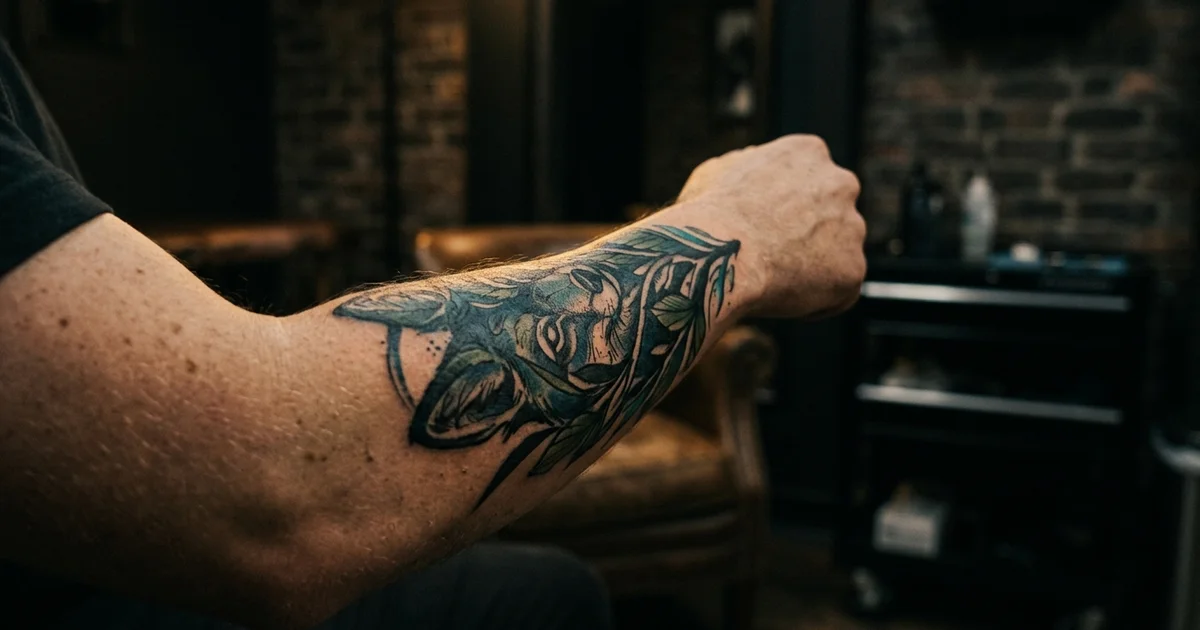
Green and blue are the historically stubborn colours, and they are removable. PicoWay’s dual 532nm and 1064nm wavelengths treat them.
If a clinic has told you your green cannot be removed, what they most likely meant is that their laser cannot remove it. A machine running only 1064nm will clear the black in your piece and leave the greens sitting there, and after several sessions of that, “it cannot be done” is an easier thing to say than “our equipment cannot do it”.
They will take more sessions than the black around them. That is a genuine and honest caveat. But “slower” and “impossible” are very different claims, and only one of them is true. This is a large part of why we chose PicoWay removal for all ink colours rather than a single-wavelength system.
Why Colour Decides Difficulty
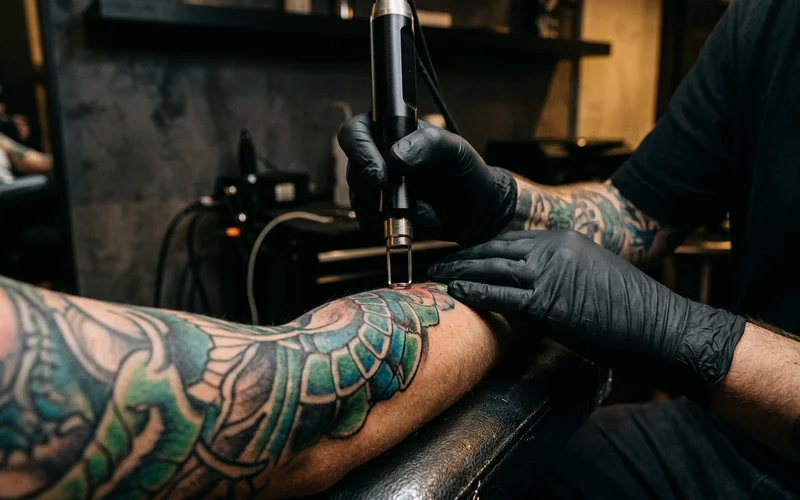
Laser removal works on selective absorption. A pigment fragments when it absorbs the energy fired at it, and pigments only absorb certain wavelengths — the ones complementary to the colour you see.
Black absorbs across essentially the whole spectrum, which is why it is the easiest colour to remove and why it responds to almost any tattoo laser. There is no wavelength it does not take up.
Coloured pigments are selective. Red and orange absorb well in the green part of the spectrum, which is what 532nm delivers. Green and blue pigments reflect the wavelengths most lasers produce and absorb best in the red and infrared range that fewer machines carry — which is precisely where the problem comes from.
So a laser’s colour capability is not about power. It is about which wavelengths are in the box. Our comparison of how PicoWay compares on coloured ink goes through the specifics machine by machine.
What “stubborn” actually means
Not that the ink is indestructible. That your clinic’s wavelength does not match its absorption band. Change the wavelength and stubborn ink stops being stubborn.
The Realistic Difficulty Order
| Ink colour | Difficulty | Wavelength used | Typical behaviour |
|---|---|---|---|
| Black | Easiest | 1064nm | Clears first, responds to every session |
| Dark brown, dark blue | Easy | 1064nm | Follows black closely |
| Red, orange | Moderate | 532nm | Responds well, clears steadily |
| Purple, violet | Moderate to hard | 532nm/1064nm | Variable by pigment formulation |
| Green | Hard | 532nm/1064nm | Slower, needs more passes |
| Sky blue, turquoise | Hard | 532nm/1064nm | Slower, often the last to go |
| Yellow | Hard | 532nm | Faint to start with, awkward to target |
| White, light cosmetic | Hardest | Assessed case by case | May oxidise and darken before clearing |
White pigment deserves the separate warning it gets in that table. It commonly contains titanium dioxide, and titanium dioxide can undergo a reduction reaction under laser energy that turns it grey or black on the first pass. It usually clears from there with further sessions, but it looks alarming and it is the reason we always patch test white-containing work and tell you what may happen first.
What to Expect on a Multi-Colour Piece
Your tattoo will fade unevenly, and it will look worse before it looks better.
Black lifts first and fastest. After two or three sessions the black outline and shading may be noticeably lighter while the greens and blues sit there looking almost untouched. That gap is at its most visually jarring somewhere around the middle of the course, and it is completely normal.
What that means practically is that your session count is set by your slowest colour, not your average one. A piece that is 80% black and 20% green will take as long as the green needs. Our guide to how colour affects session count sets out how that interacts with the other variables.
We treat different colours with different wavelengths in the same session, switching as we work across the piece. Sometimes we prioritise: on a large mixed tattoo we may focus early sessions on the areas that will respond, then concentrate later ones on the stragglers once the surrounding pigment is out of the way.
There is a reason for that order beyond efficiency. Pigment sitting above other pigment shields it, so clearing the responsive black and dark tones first exposes the greens and blues underneath to more of the energy aimed at them. Attacking the hardest colour from session one, before the surrounding ink has thinned, tends to waste passes on pigment that is partly hidden.
It also means that if you are three sessions in elsewhere and have been told the green “will not move”, that may be a sequencing and wavelength problem rather than a verdict on the ink. It is worth having someone look at what is actually left.
Being Honest About Limits
Some pigments genuinely do not clear completely. Modern inks are proprietary formulations and manufacturers do not publish their compositions, so occasionally a specific pigment simply does not respond the way its colour suggests it should.
We patch test for exactly this reason. A small treated area tells us how your ink actually behaves rather than how it should behave in theory, and that is the information you deserve before committing to a course rather than after.
If your patch test suggests a particular colour will be difficult, we will say so at the consultation. On our fixed-price packages that honesty costs us nothing to give — we are not billing you per session, so there is no incentive to be vague about it and every reason to set your expectations correctly from the start.
Bring your coloured piece in. If someone else has stalled on it, we would like to look at what is actually left.